Style of Art Where 3d Shape Is Made Using Paper Manufacture
Have yous e'er watched an blithe moving-picture show and wondered how people could create such impressive 3D characters? Or mayhap yous've idea about how interior designers tin can create lifelike renders of a building or space that isn't even built yet.
The answer to both scenarios is 3D modeling. Only, what exactly is 3D modeling? How many different disciplines employ this art form? And how do you even go nigh creating a 3D model?
These are all valid questions, as the art of 3D modeling can seem complicated and elusive to those who take never done it. Whether you lot're looking to learn this technique, or yous're just generally curious, we at Foyr have all the necessary data for y'all!
What is 3D Modeling?
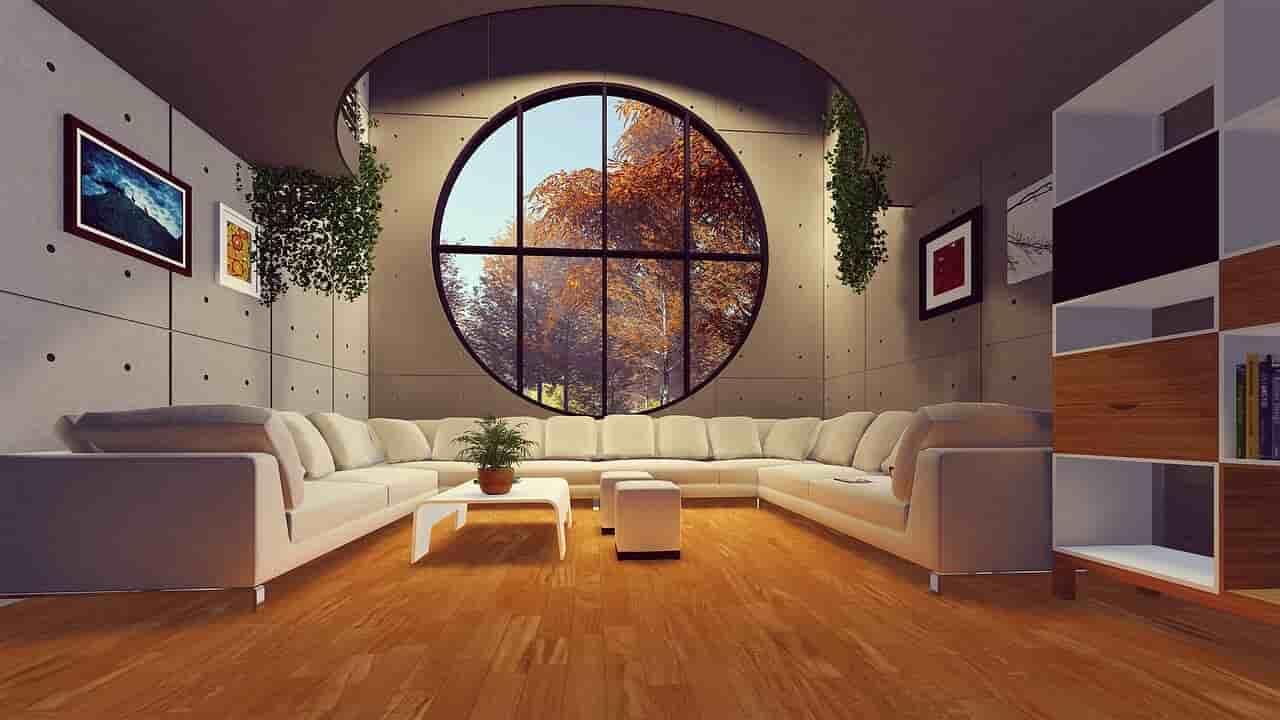
3D modeling is the cosmos of digital, three-dimensional graphics. There is a variety of 3D modeling software available that helps the users in sculpting, texturing, and designing 3D models. The art of 3D modeling is actually based on mathematics, and there are multiple techniques, workflows, and modeling software options to choose from. Thus, the cosmos of 3D models tends to be a more complex, time-consuming process. The good thing is that in that location are tutorials bachelor for nearly of the 3D modeling software over the internet that can guide a user through complicated algorithms and functions.
What are 3D Models Used For?
3D models can be used within a variety of fields. Some of the most common applications are:
- Designing 3D characters for animated films and video games.
- Building up of a product blueprint.
- Developing new products within fields similar medicine and engineering science.
- Creating digitized 3D garments for the mode industry.
- Modeling and rendering unbuilt spaces within the real manor industry.
How Do You Create a 3D Model?
There are various techniques for creating a 3D model, which has evolved over time thanks to improvements in technology. Regardless of what industry you lot are using 3D modeling for, there are four principal methods to choose from:
- Private Modeling
- Polygonal Modeling
- Rational B-Spline Modeling
- Non-Uniform Rational Footing Spline (NURBS)
- CAD Software
- Solid Modeling
- Wireframe Modeling
- Surface Modeling
- Alternative Solutions
Type of 3D Modeling
In this post, nosotros will walk you through these four types of 3D modeling, and also provide some alternate solutions if this procedure feels too circuitous for your creative needs.
1. Primitive Modeling
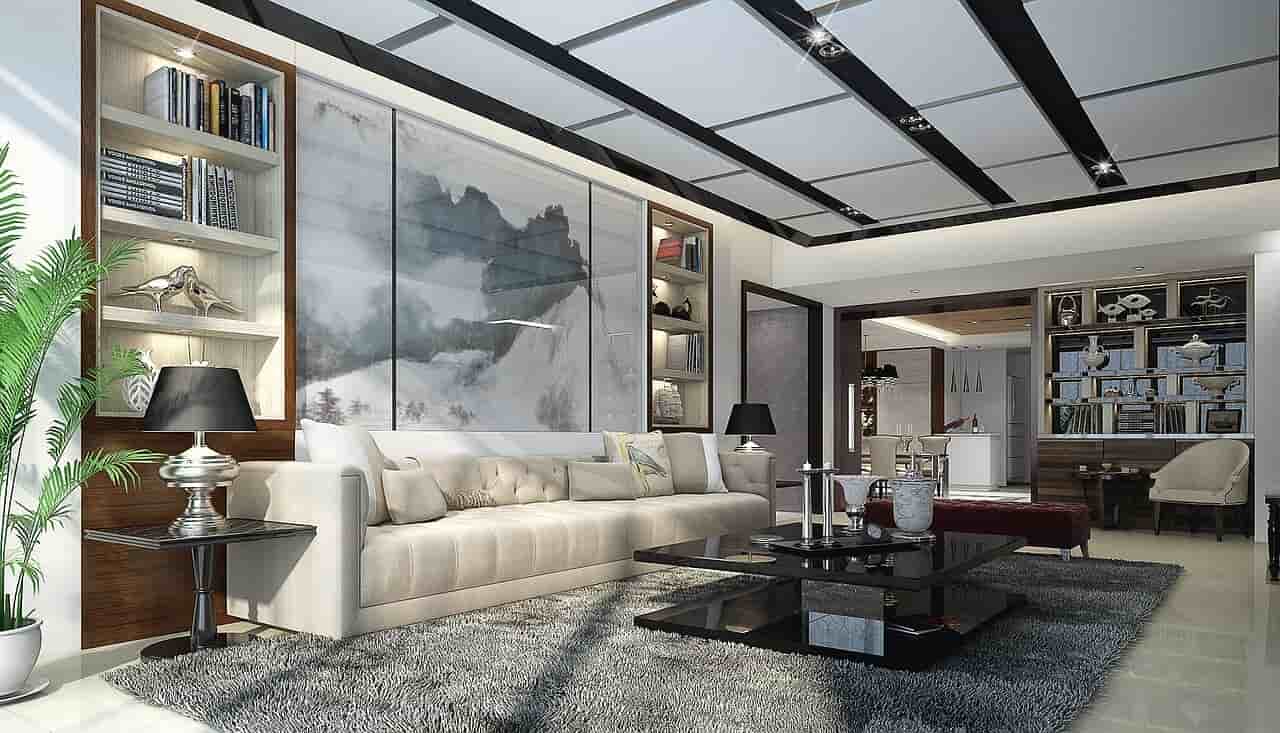
This type of 3D modeling by and large uses spheres, cubes, and other variations of these ii shapes to put together the desired shapes. It is chosen archaic because it is a very rudimentary form of 3D modeling, mainly created through the combination of different pre-existing shapes.
This kind of modeling generally utilizes bones Boolean processors to become the right shapes and outlines. Boolean operators are some of the about common ways of generating three-dimensional surfaces and shapes. Designers can combine two unlike shapes or subtract one shape from another to create a new object.
[/vc_column_text]
2. Polygonal Modeling
This type of 3D modeling is done by working with X, Y, and Z coordinates to define different shapes and surfaces and and then combining the different surfaces into one behemothic shape or model.
When designers use the polygonal modeling technique, they typically begin by creating a wire mesh in the desired shape – this requires a practiced working knowledge of the polygonal mesh theory, which ways that this type of modeling might exist likewise complex for beginners.
The most common use of this type of 3D modeling is in scanline rendering, which looks at each row of the model to generate an overall shape.
iii. Rational B-Spline Modeling
Rational B-Spline Modeling is the virtually common blazon of 3D modeling and too bases its engineering science on the combining and adjusting of geometric forms. Users brainstorm by creating the dimensions of each shape, and these polygons tin can then be twisted and curved to go to achieve the desired 3D design.
Ane of the master reasons for this method'due south popularity is that is easy to learn and master. This means that it has found resonance among beginners and professionals alike, and it enables people with various backgrounds to create compelling and unique forms.
Run into also – 3D Presentation Software
iv. Non-Uniform Rational Ground Spline (NURBS)
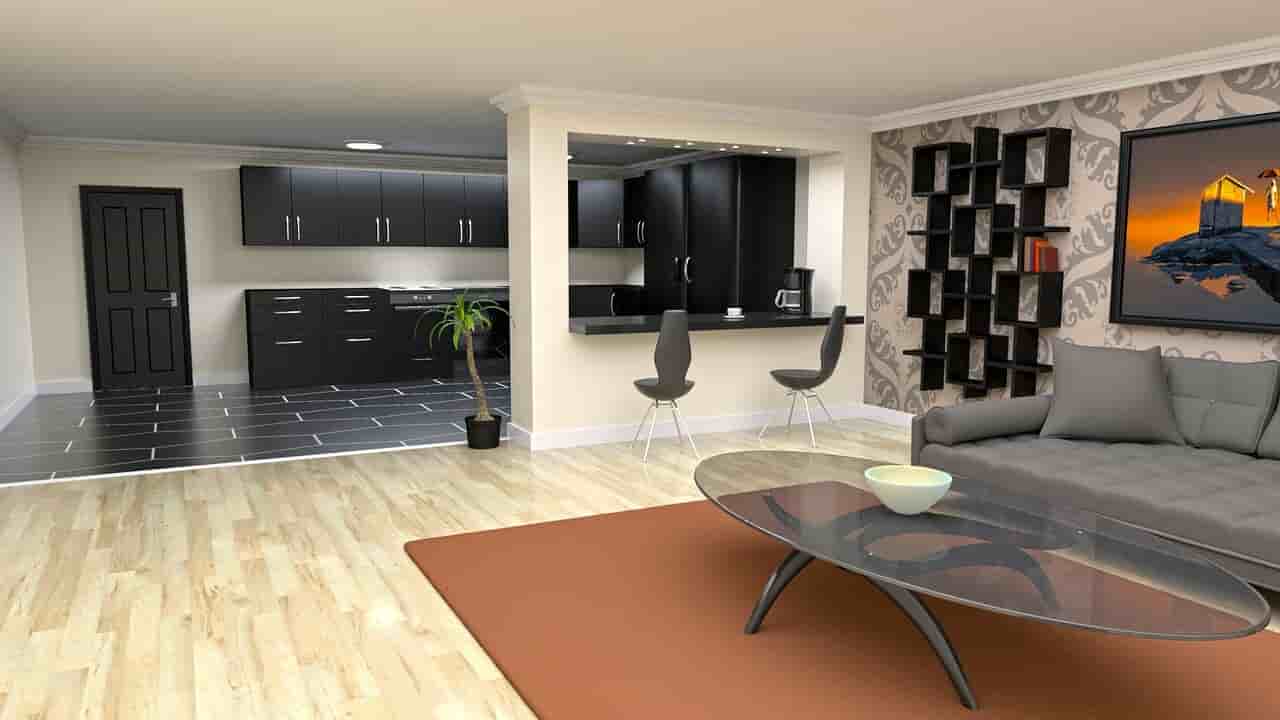
The final type of 3D modeling we are going to explore is Not-Compatible Rational Basis Spline or NURBS for curt. This is a very pop method of 3D modeling due to its elegance, as information technology functions via a mathematical model that can exist applied in a variety of scenarios to create realistic curves and surfaces.
The beauty of NURBS is that it can operate independently as an efficient program – meaning designers can rely on the technology itself to create realistic models – only it also welcomes homo intervention and customization to add together finishing touches to the 3D models.[/vc_column_text]
v. CAD Software
While talking most 3D modeling and its types, it is incommunicable to not discuss the role of CAD Software (estimator-aided blueprint). CAD software is an important invention with regards to 3D modeling. It helps in the visualization of the desired objects, designs, and models in virtual reality. Some of the of import tasks that can be accomplished with the use of CAD software are 3D printing, 3D sculpting, 3D rendering, and of course, 3D modeling. The calculations involved in the making of 3D objects are undertaken by CAD software. The job of the designer is to ascertain the shape and size of the 3D objects he/she wishes to create.
There are 3 major types of 3D modeling that fall under the rubric of CAD software: solid modeling, wireframe modeling, and surface modeling. These 3 types are further divided into subtypes based on specific features.
Let'due south walk through these major modeling types within CAD software to develop a better understanding of the visualization and functionality of virtual reality.
Encounter also – 3D Modeling vs 3D Rendering
half dozen. Solid Modeling
Solid Modeling includes working with crude shapes, for case, spheres, cubes, and n-sided prisms. However, various projects may use methods. Some first with two-dimensional portrayal sketches that are then expelled to evangelize a 3-dimensional effigy. Others add solid over solid and so as to create more intricate figures. But the resulting solid models are the same.
This sort of 3D modeling software is particularly helpful when flat surfaces or basic bends of consistent radii are included. Information technology additionally lends itself very well to exact measurements and angles. Some hit bits of programming that utilize potent demonstration incorporate Tinkercad and FreeCAD at the entry-level, and for further advanced work, SketchUp, solid words and Autodesk Fusion 360.
Advantage:
- No extensive training required and is very user-friendly. Computational prerequisites are lower since the PC isn't working with a large number of triangles. The last pieces are in every case numerically right as in the model is conceivable in reality.
Disadvantage:
- High realism in the representation of natural shapes is practically difficult to accomplish.
seven. Wireframe modeling
Wireframe modeling represents shapes as a network of vertices. Each geometrical face is made out of min. three vertices and every vertex tin be important for at least one appearance. The size and country of things are altered by changing the position of every vertex.
Numerous wireframe demonstrating devices utilize triangles as their fundamental components, and the more triangles employ, the real it looks. This is shown by "polygon bank check", the absolute number of triangles (or other planar shapes) independent within the wireframe of a model.
Generally, this method was the showtime to exist utilized to model 3D figures, at that signal having moderately depression polygon counts, making figures to some caste blocky. There are numerous programs that apply this methodology, nevertheless a portion of the master programs that allow manual control of wireframe vertices are Blender, Autodesk Maya, 3DS Max, and Movie theatre 4D.
Advantage:
- It'southward conceivable to accomplish more complex surfaces and bends contrasted with solid modeling.
Disadvantages:
- Users require formal grooming.
- High resolution will require a huge number of polygons and computational needs volition be college.
eight. Surface Modeling
Surface Modeling is another type of modeling that comes nether computer-aided blueprint (CAD). It takes a higher step when it comes to handling the complication of shapes. Information technology is the nearly upgraded blazon of modeling which defines the shape and curvature past depending upon the guiding lines.
A smooth surface is calculated by the software which and then accomplishes the task of connecting the guiding lines. It is nigh commonly used for illustrations and architectural renderings considering of its power to seamlessly integrate all the necessary elements. Equally a variant to guiding lines, some programs even make use of control points and control panels in example of a tangential plane.
Surface modeling has the ability to produce fifty-fifty those visual representations which are not possible in the real world. However, for this very reason, it becomes necessary to ascertain whether it is even possible to physically manufacture such a pattern. The main tool out of all the modeling tools offered past different programs, 'Loft' is used specifically for surface modeling. Some programs that support surface modeling are Catia, FreeCAD, Inventor, ZBrush, and Slideworks.
Advantage:
- Its ability to handle complex surfaces makes it a preferred type of modeling in aircraft and thermodynamics where much attention is paid to surface advent.
Disadvantage:
- It is a complex form of 3D modeling therefore, requires advanced programs and a higher level of preparation and expertise on the part of the designer.
ix. Alternate Solutions
As you can see, there are many methods and techniques to creating 3D models. Each type has its own benefits, and they tin be used interchangeably co-ordinate to the designer'due south skillsets and project requirements. if yous'd like to know more about interior design software to explore different types of modeling, check out our read on the best software used by modern-day professionals.
But, as you can also see, the 3D modeling process can be very complex and require knowledge of various software and mathematical theories. If yous are a beginner in the world of creating 3D models, you might find it more helpful to work with and customize pre-existing models, instead of starting from scratch.
See too – How To Create 3D Walkthroughs
Ane tool that allows for this is Foyr Neo, a infinite planning, designing, and presenting software created with interior designers in heed.
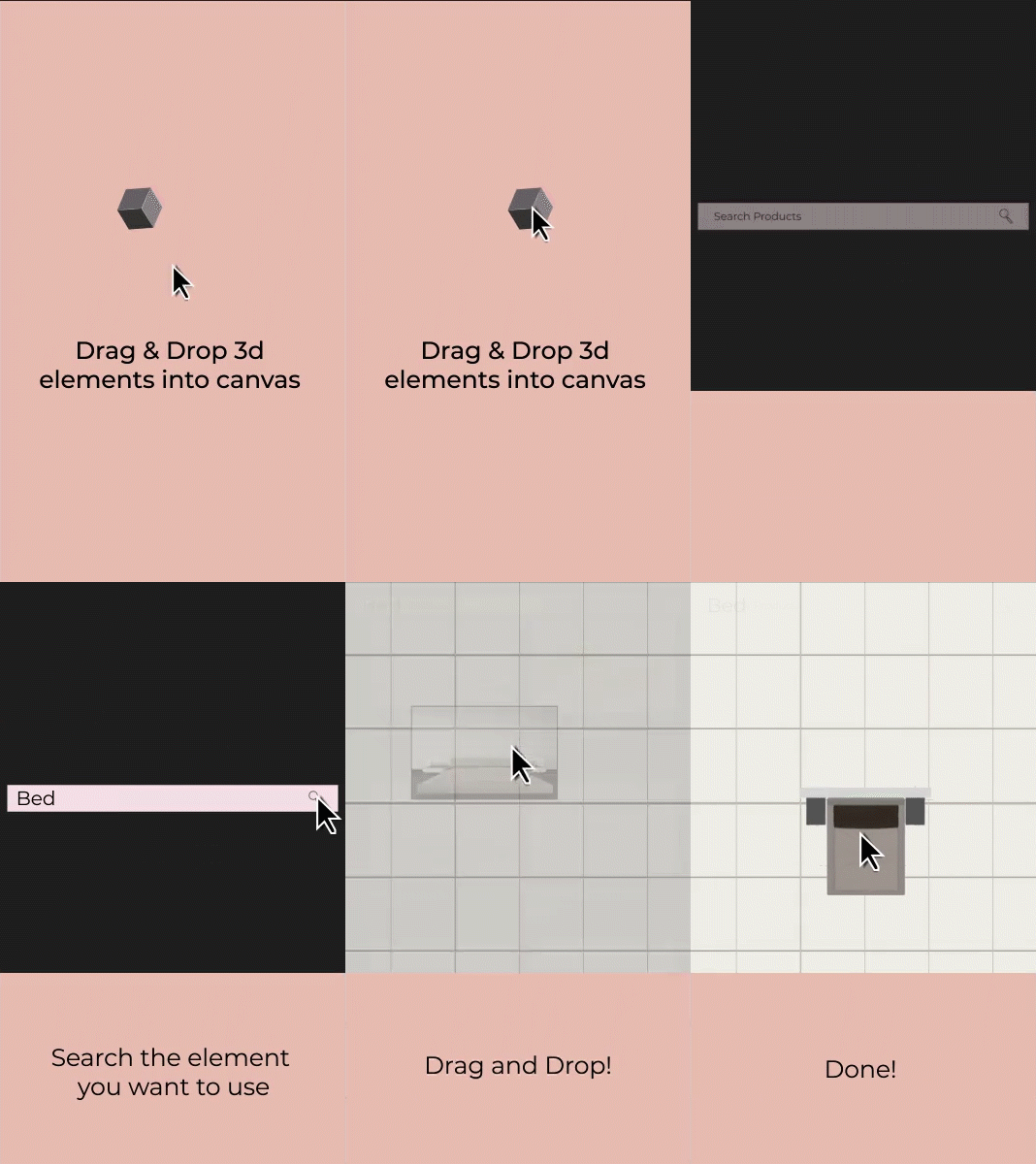
When working in Neo, you can drag and drop over fifty,000 pre-modeled products from our catalogue direct into your design. In one case you've added an detail, you tin can fully customize the size, shape, texture, color, and more, with but the click of a button. You tin also accomplish out to Foyr Neo's customer success team, and they tin can create custom 3D models to fit whatsoever of your needs.
With Neo, y'all tin can have completely unique 3D models, without having to learn circuitous software or spend a neat deal of fourth dimension starting from scratch. If this sounds like it would fit your needs, then sign up today for a 14-day free trial!

0 Response to "Style of Art Where 3d Shape Is Made Using Paper Manufacture"
Post a Comment